Please fill in the form below, so we can support you in your request.


    ASICAMD (Xilinx)AchronixIntel (Altera)LatticeMicrochip (MicroSemi)Other

    X
    CONTACT MLE
    CONTACT MLE
    We are glad that you preferred to contact us. Please fill our short form and one of our friendly team members will contact you back.


      ASICAMD (Xilinx)AchronixIntel (Altera)LatticeMicrochip (MicroSemi)Other

      X
      CONTACT MLE

      FPGA Hardware

      De-Risk System Designs With FPGA Full System Stacks (FFSS)
      The difficulty in programming FPGAs, in particular those System-on-Chip (SoC) FPGA with embedded CPUs, has long been considered a disadvantage that prevents FPGA from becoming a general computation solution. However, integrated and pre-validated building blocks or FPGA hardware such as FPGA Modules combined with Compute, Video, Storage and Networking FPGA software subsystems significantly increase your productivity while shortening your time-to-market for new product initiatives.

      MLE provides FPGA Full System Stacks integrating FPGA hardware like Starterkits, System-on-Modules (SoMs) and customized boards from Trenz Electronic. This gives you a low-risk design trajectory from a working proof-of-concept (POC) over a low to mid volume implementation with SoMs eventually into a custom board for mid to high volume cost-down. During every single phase you will receive expert FPGA support from MLE.

      FPGA Hardware Solutions

      FPGA Full System Stacks

      FPGA Full System Stack icon

      FPGA Full System Stacks (FFSS) combine Trenz System-on-Modules (SoM) and carrier boards with MLE IP Cores and pre-validated software subsystems to reduce development costs and risks for new products. 

      FPGA System-on-Modules

      From FPGA Starterkits over FPGA Boards and System-on-Modules (SoM) to off-the-shelf or customized carrier boards, the close partnership between MLE and Trenz Electronic get you faster and closer towards your FPGA target hardware.

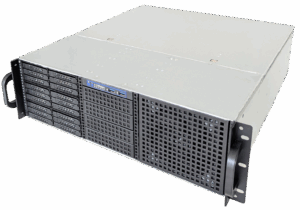
      MLE NVMe FFRAID Cards can transfer large streams of data from multiple sensors to a RAID of NVMe SSDs at 100/200/400 Gbps, while supporting advanced data-in-motion pre- and post-processing functions such as record/replay/pause, data proxy, data decimation and meta data indexing for real-time data management.

      Unlike 3rd-party Network-Attached-Storage (NAS) systems which have limited read/write bandwidth, MLE NVMe FFRAID can record data loss-less and gapless at 400 Gbps or more.

      Rapid Prototyping Systems (RPS) which facilitate architecure exploration and testing of Software-Defined Vehicles (SDV) for Automotive Zonal Architectures.

      MLE combines Network Accelerators with Data Diodes to enable secure, high-speed data transfer and video streaming between networks with different security classifications.