
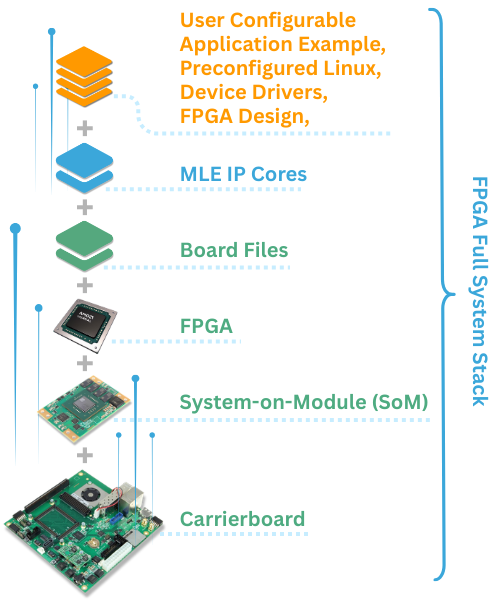
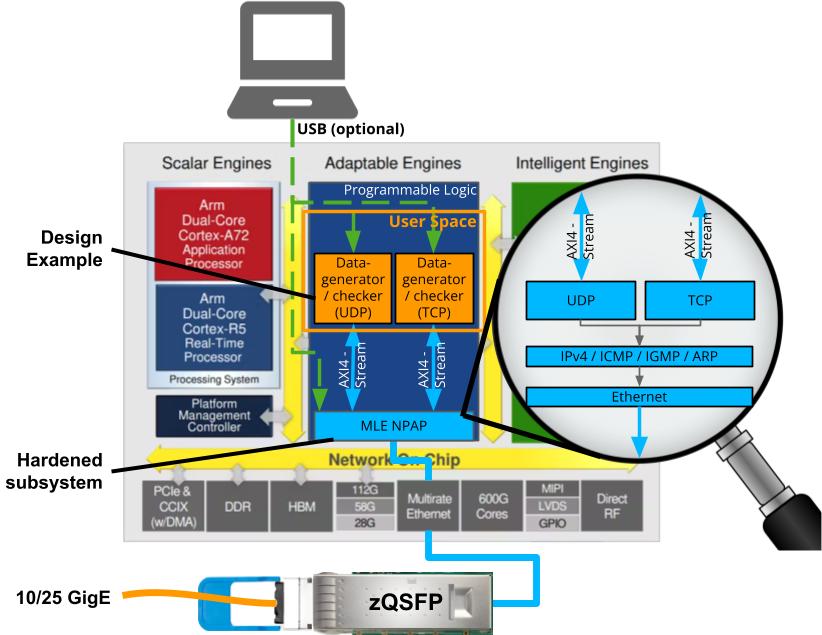
 FFSS-TE0950-NPAP-25G Block Diagram | TE0950 with Full Accelerated 25G TCP/UDP/IP The FFSS-TE0950-NPAP-25G is a customizable FPGA design platform with accelerated 25 GigE network connectivity. This FPGA Full Systems Stack combines MLE NPAP (the TCP/UDP/IP Network Protocol Acceleration Platform) with Trenz Electronic’s TE0950 Evaluation Board featuring the AMD Versal™ AI Edge VE2302. All key functionality is pre-integrated and pre-validated and ships as a compilable FPGA design project along with an IP-Core license from MLE. |
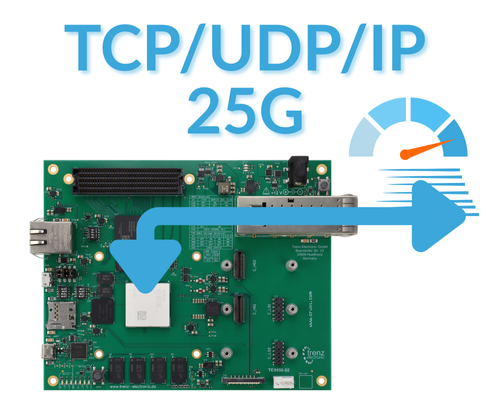
FFSS-TE0950-NPAP-10G Block Diagram | TE0950 with Full Accelerated 10G TCP/UDP/IP The FFSS-TE0950-NPAP-10G is a customizable FPGA design platform with accelerated 10 GigE network connectivity. This FPGA Full Systems Stack combines MLE NPAP (the TCP/UDP/IP Network Protocol Acceleration Platform) with Trenz Electronic’s TE0950 Evaluation Board featuring the AMD Versal™ AI Edge VE2302. All key functionality is pre-integrated and pre-validated and ships as a compilable FPGA design project along with an IP-Core license from MLE. |
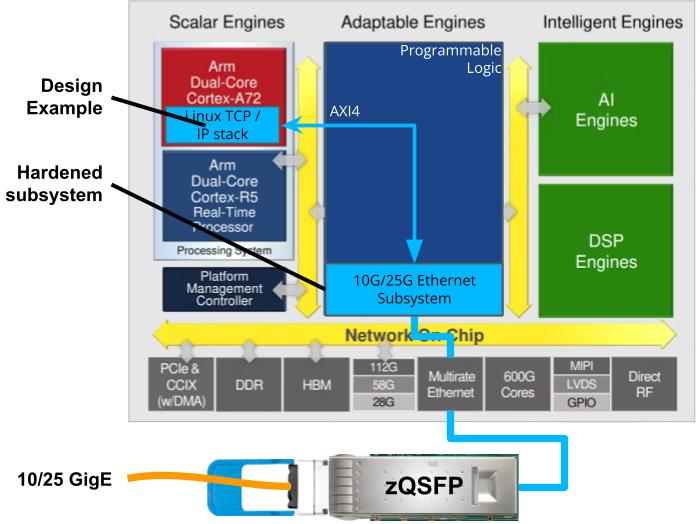
| TE0950 with 25G Linux Network Stack (Non-Accelerated) The FFSS-TE0950-Netdev-25G is a customizable FPGA design platform for Linux-based (non-accelerated) 25 GigE network connectivity. This FPGA Full Systems Stack combines an MLE optimized Linux network stack with Trenz Electronic’s TE0950 Evaluation Board featuring the AMD Versal™ AI Edge VE2302. All key functionality is pre-integrated and pre-validated and ships as a compilable FPGA design project along with an IP-Core license from MLE. |
| TE0950 with 10G Linux Network Stack (Non-Accelerated) The FFSS-TE0950-Netdev-10G is a customizable FPGA design platform for Linux-based (non-accelerated) 10 GigE network connectivity. This FPGA Full Systems Stack combines an MLE optimized Linux network stack with Trenz Electronic’s TE0950 Evaluation Board featuring the AMD Versal™ AI Edge VE2302. All key functionality is pre-integrated and pre-validated and ships as a compilable FPGA design project along with an IP-Core license from MLE. |
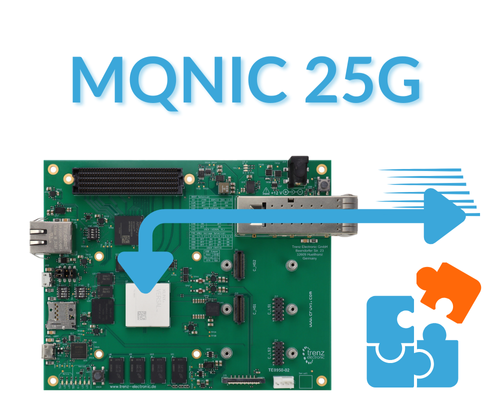 | TE0950 with 25G Configurable Multi-Queue FPGA NIC The FFSS-TE0950-MQNIC-25G is a customizable FPGA design platform with configurable Multi-Queue 25 GigE network connectivity. This FPGA Full Systems Stack combines an MLE optimized Linux network stack with Trenz Electronic’s TE0950 Evaluation Board featuring the AMD Versal™ AI Edge VE2302. All key functionality is pre-integrated and pre-validated and ships as a compilable FPGA design project along with an IP-Core license from MLE. |
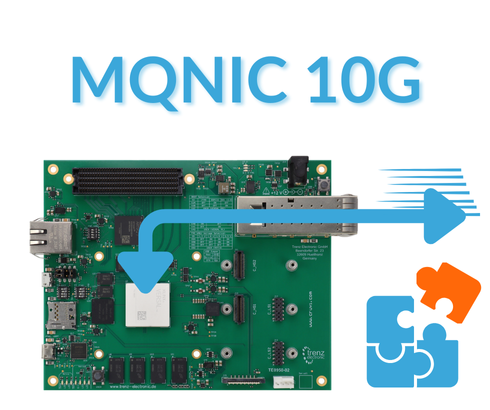 | TE0950 with 10G Configurable Multi-Queue FPGA NIC The FFSS-TE0950-MQNIC-10G is a customizable FPGA design platform with configurable Multi-Queue 10 GigE network connectivity. This FPGA Full Systems Stack combines an MLE optimized Linux network stack with Trenz Electronic’s TE0950 Evaluation Board featuring the AMD Versal™ AI Edge VE2302. All key functionality is pre-integrated and pre-validated and ships as a compilable FPGA design project along with an IP-Core license from MLE. |
FFSS-TE0955-NPAP-25G Block Diagram | TE0955 SoM + TEB0955 Carrierboard with Full Accelerated 25G TCP/UDP/IP The FFSS-TE0955-NPAP-25G is a customizable FPGA design platform with accelerated 25 GigE network connectivity. This FPGA Full Systems Stack combines MLE NPAP (the TCP/UDP/IP Network Protocol Acceleration Platform) with Trenz Electronic’s TE0955 System-on-Module featuring the AMD Versal™ AI Edge VE2302 and TEB0955 Carrierboard. All key functionality is pre-integrated and pre-validated and ships as a compilable FPGA design project along with an IP-Core license from MLE. |
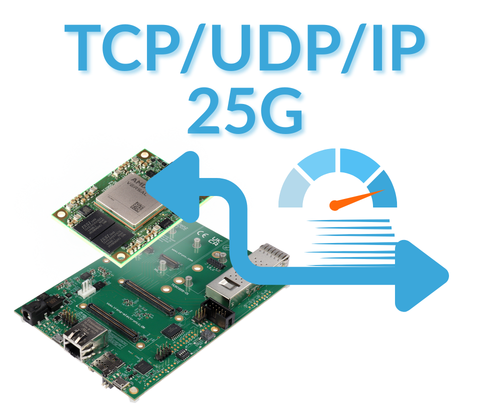
FFSS-TE0955-NPAP-10G Block Diagram | TE0955 SoM + TEB0955 Carrierboard with Full Accelerated 10G TCP/UDP/IP The FFSS-TE0955-NPAP-10G is a customizable FPGA design platform with accelerated 10 GigE network connectivity. This FPGA Full Systems Stack combines MLE NPAP (the TCP/UDP/IP Network Protocol Acceleration Platform) with Trenz Electronic’s TE0955 System-on-Module featuring the AMD Versal™ AI Edge VE2302 and TEB0955 Carrierboard. All key functionality is pre-integrated and pre-validated and ships as a compilable FPGA design project along with an IP-Core license from MLE. |
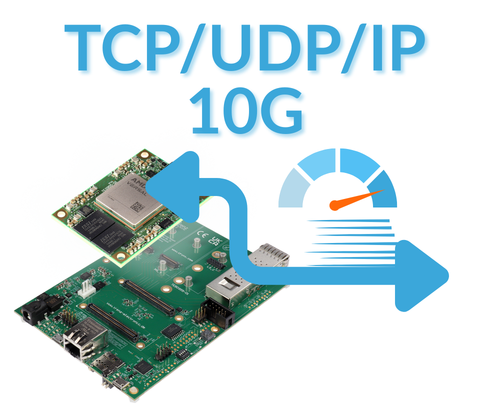
FFSS-TE0955-Netdev-25G Block Diagram | TE0955 SoM + TEB0955 Carrierboard with 25G Linux Network Stack (Non-Accelerated) The FFSS-TE0955-Netdev-25G is a customizable FPGA design platform for Linux-based (non-accelerated) 25 GigE network connectivity. This FPGA Full Systems Stack combines an MLE optimized Linux network stack with Trenz Electronic’s TE0955 System-on-Module featuring the AMD Versal™ AI Edge VE2302 and TEB0955 Carrierboard. All key functionality is pre-integrated and pre-validated and ships as a compilable FPGA design project along with an IP-Core license from MLE. |
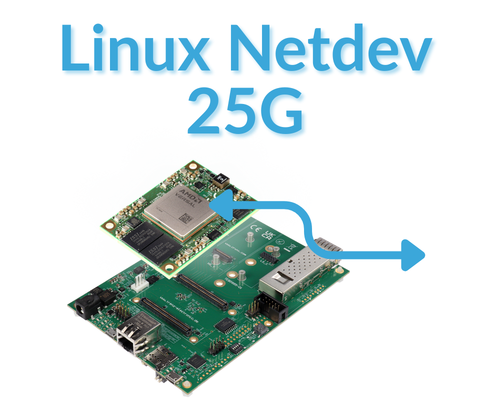
FFSS-TE0955-Netdev-10G Block Diagram | TE0955 SoM + TEB0955 Carrierboard with 10G Linux Network Stack (Non-Accelerated) The FFSS-TE0955-Netdev-10G is a customizable FPGA design platform for Linux-based (non-accelerated) 10 GigE network connectivity. This FPGA Full Systems Stack combines an MLE optimized Linux network stack with Trenz Electronic’s TE0955 System-on-Module featuring the AMD Versal™ AI Edge VE2302 and TEB0955 Carrierboard. All key functionality is pre-integrated and pre-validated and ships as a compilable FPGA design project along with an IP-Core license from MLE. |
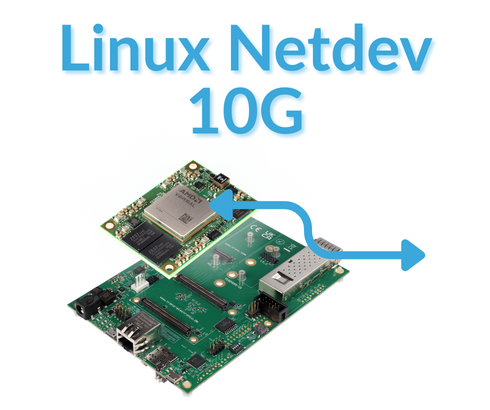
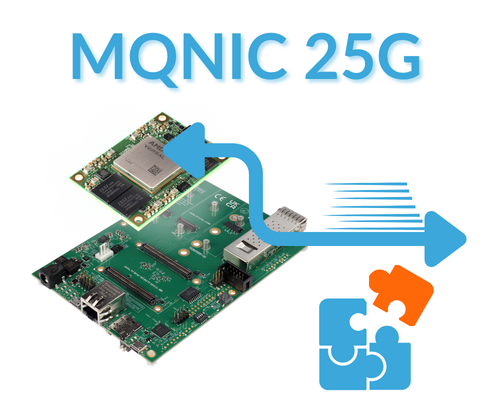 | TE0955 SoM + TEB0955 Carrierboard with 25G Configurable Multi-Queue FPGA NIC The FFSS-TE0955-MQNIC-25G is a customizable FPGA design platform with configurable Multi-Queue 25 GigE network connectivity. This FPGA Full Systems Stack combines an MLE optimized Linux network stack with Trenz Electronic’s TE0955 System-on-Module featuring the AMD Versal™ AI Edge VE2302 and TEB0955 Carrierboard. All key functionality is pre-integrated and pre-validated and ships as a compilable FPGA design project along with an IP-Core license from MLE. |
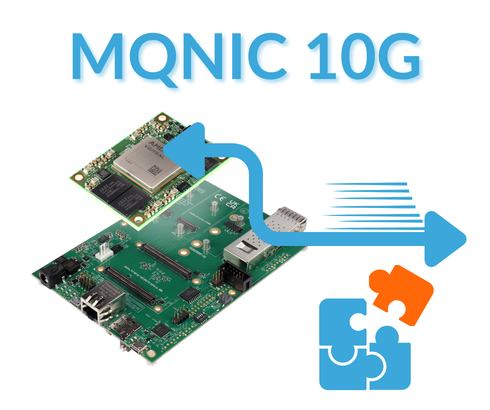 | TE0955 SoM + TEB0955 Carrierboard with 10G Configurable Multi-Queue FPGA NIC The FFSS-TE0955-MQNIC-10G is a customizable FPGA design platform with configurable Multi-Queue 10 GigE network connectivity. This FPGA Full Systems Stack combines an MLE optimized Linux network stack with Trenz Electronic’s TE0955 System-on-Module featuring the AMD Versal™ AI Edge VE2302 and TEB0955 Carrierboard. All key functionality is pre-integrated and pre-validated and ships as a compilable FPGA design project along with an IP-Core license from MLE. |
| TEI0187 SoM + TEB0187 Carrierboard with Full Accelerated 25G TCP/UDP/IP The FFSS-TEI0187-NPAP-25G is a customizable FPGA design platform with accelerated 25 GigE network connectivity. This FPGA Full Systems Stack combines MLE NPAP (the TCP/UDP/IP Network Protocol Acceleration Platform) with Trenz Electronic’s TEI0187 System-on-Module featuring the Altera® Agilex™ 5E and TEB0187 Carrierboard. All key functionality is pre-integrated and pre-validated and ships as a compilable FPGA design project along with an IP-Core license from MLE. |
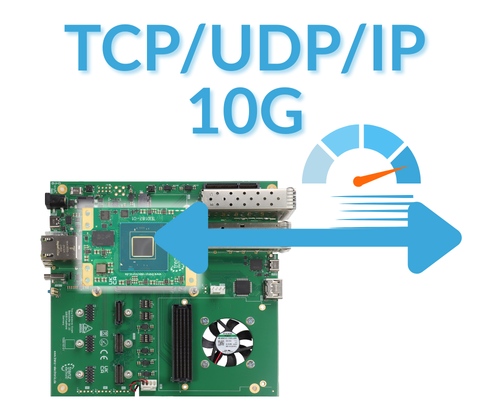
| TEI0187 SoM + TEB0187 Carrierboard with Full Accelerated 10G TCP/UDP/IP The FFSS-TEI0187-NPAP-10G is a customizable FPGA design platform with accelerated 10 GigE network connectivity. This FPGA Full Systems Stack combines MLE NPAP (the TCP/UDP/IP Network Protocol Acceleration Platform) with Trenz Electronic’s TEI0187 System-on-Module featuring the Altera® Agilex™ 5E and TEB0187 Carrierboard. All key functionality is pre-integrated and pre-validated and ships as a compilable FPGA design project along with an IP-Core license from MLE. |
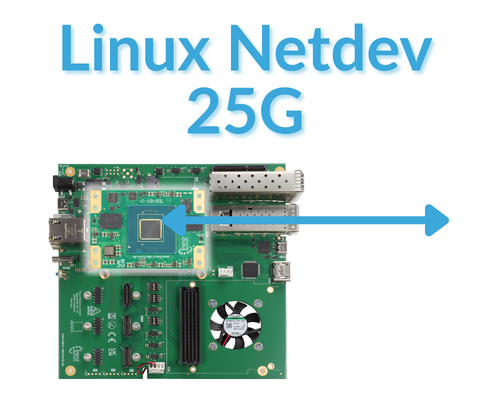
| TEI0187 SoM + TEB0187 Carrierboard with 25G Linux Network Stack (Non-Accelerated) The FFSS-TEI0187-Netdev-25G is a customizable FPGA design platform for Linux-based (non-accelerated) 25 GigE network connectivity. This FPGA Full Systems Stack combines an MLE optimized Linux network stack with Trenz Electronic’s TEI0187 System-on-Module featuring the Altera® Agilex™ 5E and TEB0187 Carrierboard. All key functionality is pre-integrated and pre-validated and ships as a compilable FPGA design project along with an IP-Core license from MLE. |
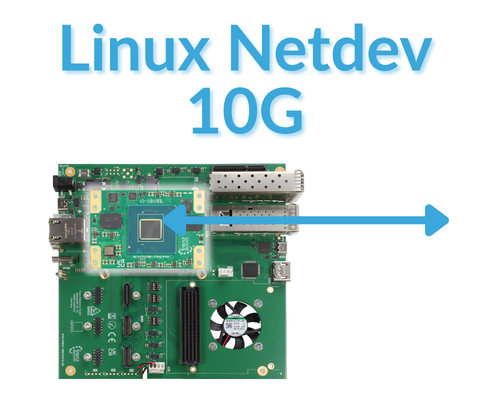
| TEI0187 SoM + TEB0187 Carrierboard with 10G Linux Network Stack (Non-Accelerated) The FFSS-TEI0187-Netdev-10G is a customizable FPGA design platform for Linux-based (non-accelerated) 10 GigE network connectivity. This FPGA Full Systems Stack combines an MLE optimized Linux network stack with Trenz Electronic’s TEI0187 System-on-Module featuring the Altera® Agilex™ 5E and TEB0187 Carrierboard. All key functionality is pre-integrated and pre-validated and ships as a compilable FPGA design project along with an IP-Core license from MLE. |
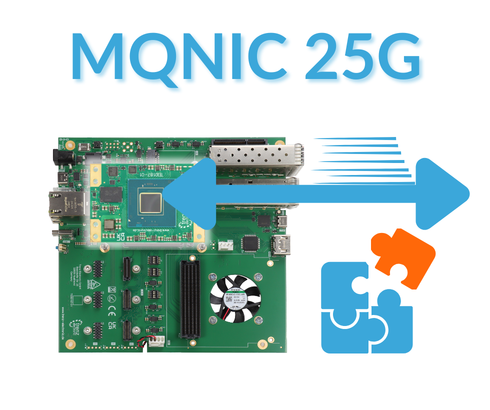 | TEI0187 SoM + TEB0187 Carrierboard with 25G Configurable Multi-Queue FPGA NIC The FFSS-TEI0187-MQNIC-25G is a customizable FPGA design platform with configurable Multi-Queue 25 GigE network connectivity. This FPGA Full Systems Stack combines an MLE optimized Linux network stack with Trenz Electronic’s TEI0187 System-on-Module featuring the Altera® Agilex™ 5E and TEB0187 Carrierboard. All key functionality is pre-integrated and pre-validated and ships as a compilable FPGA design project along with an IP-Core license from MLE. |
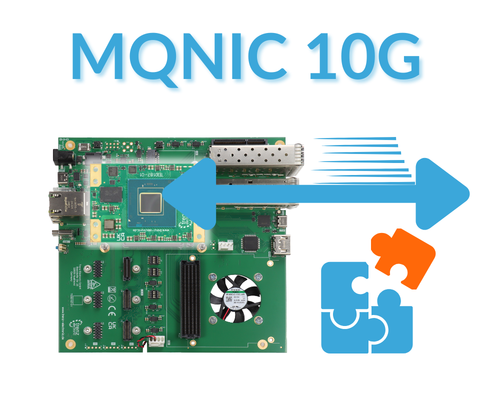 | TEI0187 SoM + TEB0187 Carrierboard with 10G Configurable Multi-Queue FPGA NIC The FFSS-TEI0187-MQNIC-10G is a customizable FPGA design platform with configurable Multi-Queue 10 GigE network connectivity. This FPGA Full Systems Stack combines an MLE optimized Linux network stack with Trenz Electronic’s TEI0187 System-on-Module featuring the Altera® Agilex™ 5E and TEB0187 Carrierboard. All key functionality is pre-integrated and pre-validated and ships as a compilable FPGA design project along with an IP-Core license from MLE. |
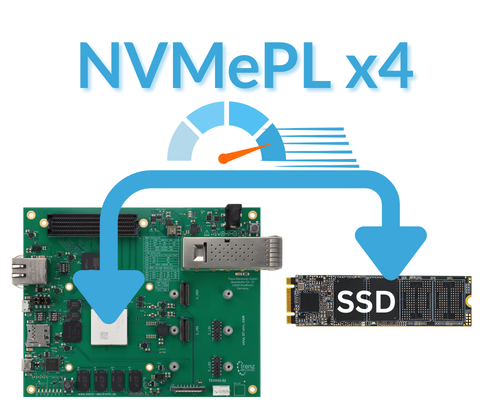 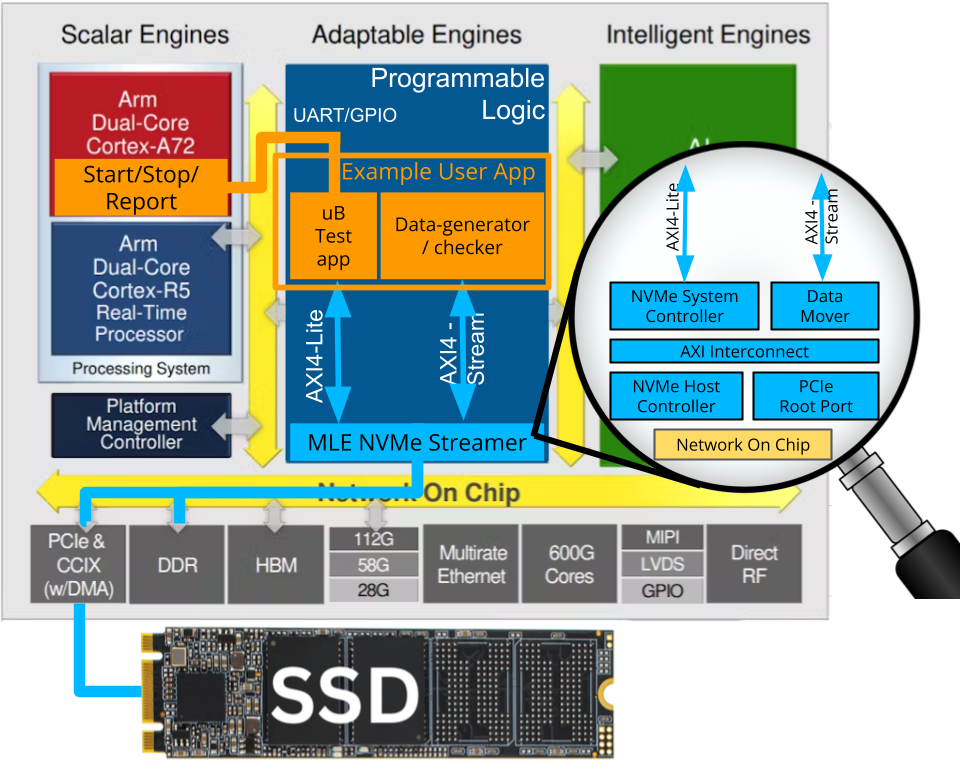 FFSS-TE0950-NVMePL-x4 Block Diagram | TE0950 with NVMePL x4 Bandwidth Accelerated NVMe data streaming with 4 lanes in PL, based on Trenz TE0950. |
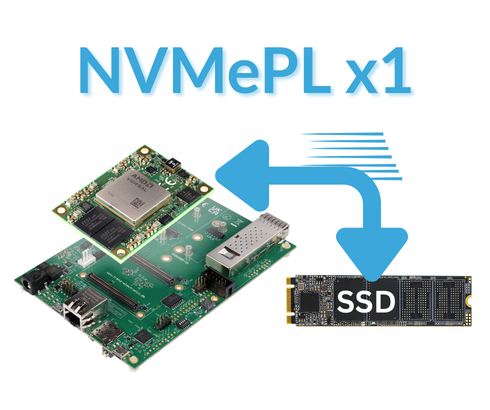
FFSS-TE0950-NVMePL-x1 Block Diagram | TE0950 with NVMePL x1 Bandwidth Accelerated NVMe data streaming with 1 lane in PL, based on Trenz TE0950. |
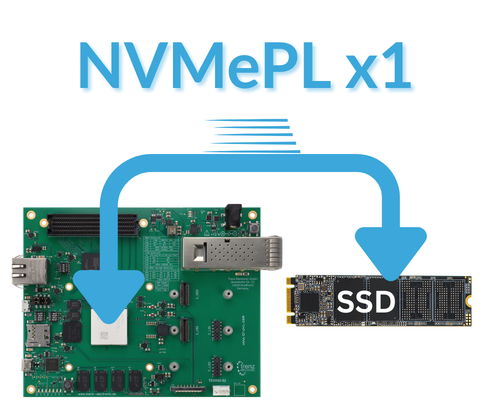
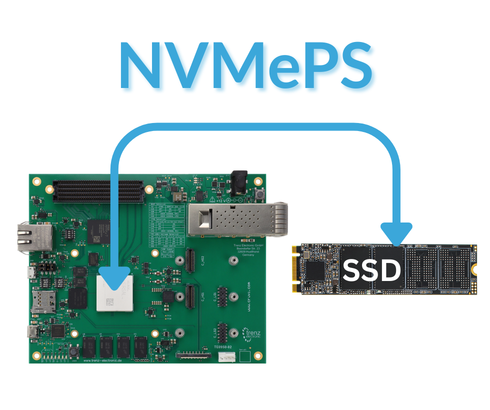
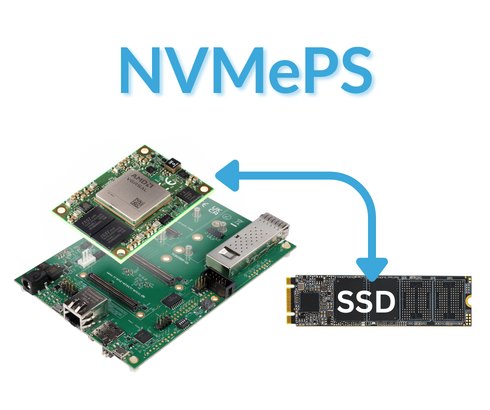
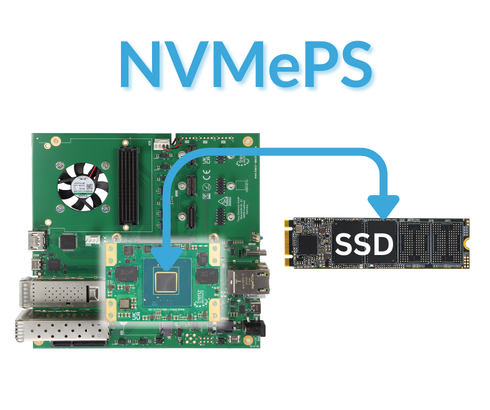
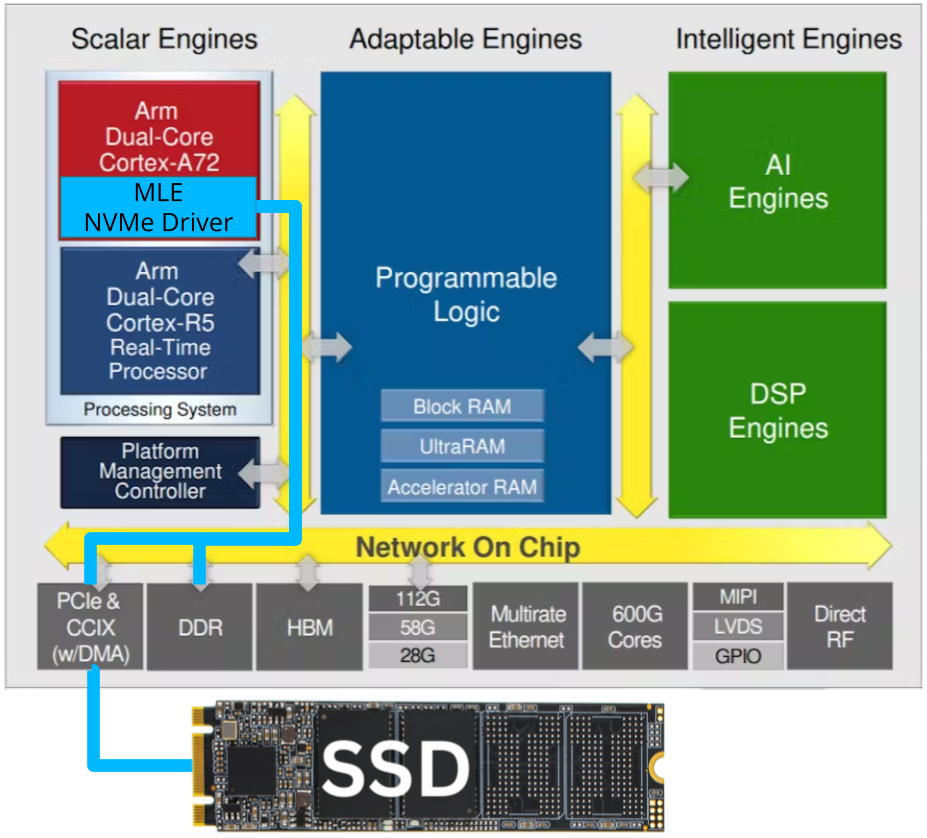 FFSS-TE0950-NVMePS Block Diagram | TE0950 with NVMePS Data read/write onto a Linux-connected NVMe SSD using Linux file system, based on Trenz TE0950. |
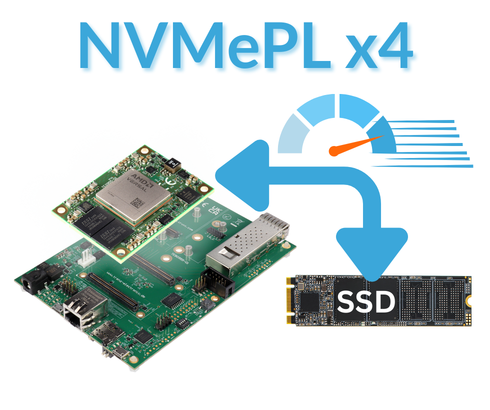 FFSS-TE0955-NVMePL-x4 Block Diagram | TE0955 SoM + TEB0955 Carrierboard with NVMePL x4 Bandwidth Accelerated NVMe data streaming with 4 lanes in PL, based on Trenz TE0955 SoM and TEB0955 Carrierboard. |
FFSS-TE0955-NVMePL-x1 Block Diagram | TE0955 SoM + TEB0955 Carrierboard with NVMePL x1 Bandwidth Accelerated NVMe data streaming with 1 lane in PL, based on Trenz TE0955 SoM and TEB0955 Carrierboard. |
FFSS-TE0955-NVMePS Block Diagram | TE0955 SoM + TEB0955 Carrierboard with NVMePS Data read/write onto a Linux-connected NVMe SSD using Linux file system, based on Trenz TE0955 SoM and TEB0955 Carrierboard. |
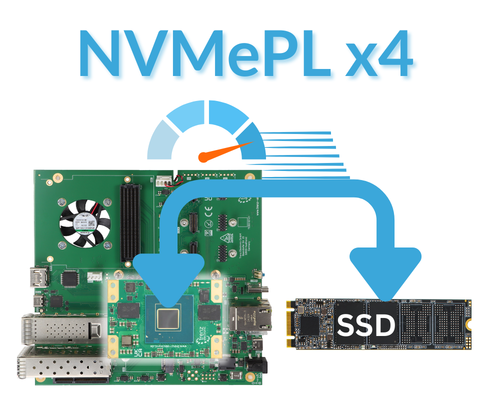 | TEI0187 SoM + TEB0187 Carrierboard with NVMePL x4 Bandwidth Accelerated NVMe data streaming with 4 lanes in PL, based on Trenz TEI0187 SoM and TEB0187 Carrierboard. |
| TEI0187 SoM + TEB0187 Carrierboard with NVMePL x1 Bandwidth Accelerated NVMe data streaming with 1 lane in PL, based on Trenz TEI0187 SoM and TEB0187 Carrierboard. |
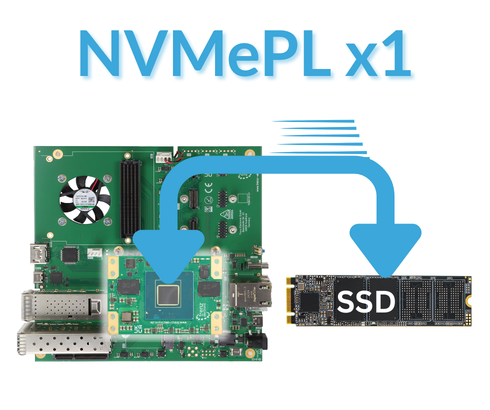
| TEI0187 SoM + TEB0187 Carrierboard with NVMePS Data read/write onto a Linux-connected NVMe SSD using Linux file system, based on Trenz TEI0187 SoM and TEB0187 Carrierboard. |

Since 1992 Trenz Electronic has operated as a provider of development and production services for the electronics industry. Services include design-in support as well as turnkey designs which typically covers all steps from product specification, hard- and software design up to prototyping and production. Trenz specializes in the design of high-speed data acquisition, high-accuracy measurement and embedded digital signal processing systems based on FPGA and CPU architectures. Trenz development service is supplemented by FPGA- and MCU-based development boards and tools.